01
Nothing hurts, so I've assumed nothing is wrong.
Decay does not announce itself. A tooth can look sound from the outside while the damage sits in a groove or between two teeth, out of sight. Pain tends to arrive late.

Thoughtful treatments designed around your goals, comfort, and long-term oral health.
Preventive care is the part of dentistry that exists to keep the rest of it small. Most of it comes down to finding decay while it is still a minor problem, and treating only the part that needs treating.
Call Now (520) 214-2484
Is This You
Preventive work is rarely dramatic. It is usually one of these.
01
Decay does not announce itself. A tooth can look sound from the outside while the damage sits in a groove or between two teeth, out of sight. Pain tends to arrive late.
02
Molars have deep grooves and narrow pits. Those are the places a brush misses and a metal probe cannot always feel, and they are where early decay tends to start.
03
Enamel can weaken before it breaks down into a cavity. Areas like that are often re-checked over time rather than treated straight away, and brushing and fluoride can help while a spot is being watched.
04
An ache usually means decay has gone past the enamel and toward the nerve. Once it reaches that point a filling may no longer be the answer, and root canal treatment or removal enters the conversation. It is a reason to have it looked at sooner rather than later.
05
Taking X-rays on a young child is not always practical. A light-based cavity check is one way of reading the chewing surfaces without asking a child to hold still for a film.
06
Older fillings can be replaced with tooth-colored material. Whether that is worth doing is a judgement, because taking out a filling that is still doing its job means removing more of the tooth around it.
The Options
No single method finds everything, and each one is blind to something another can see.
A mirror, good light and a fine metal probe. This finds decay that has already opened up, but a small cavity sitting in a groove can go unnoticed until it has grown enough to catch the tip.
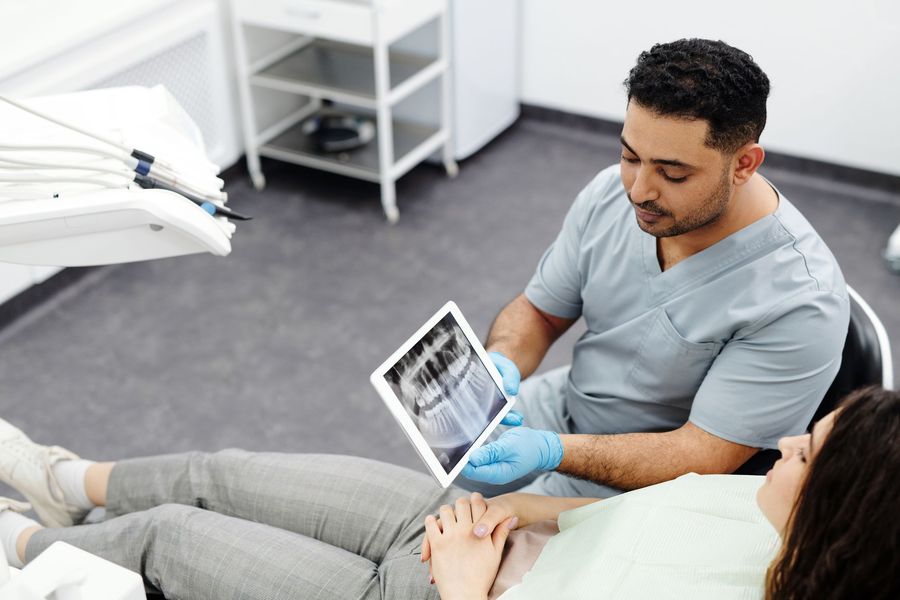
Images are the way to see between teeth, where nothing else reaches, and to judge how far decay has gone underneath a chewing surface. The trade-off is timing: decay generally has to be through the enamel before it shows on an image.
A pen-sized device shines light into the tooth and measures what comes back. Sound enamel and softened enamel return it differently, so a weak area on a chewing surface can register before it is visible. It cannot see between teeth, and it produces a number rather than a diagnosis.
Where enamel has weakened but not broken through, the option is often to strengthen and watch rather than drill. A sealant closes off the deep grooves on a chewing surface. Fluoride is used on early weak spots. Neither is a repair; both are ways of trying to avoid needing one.
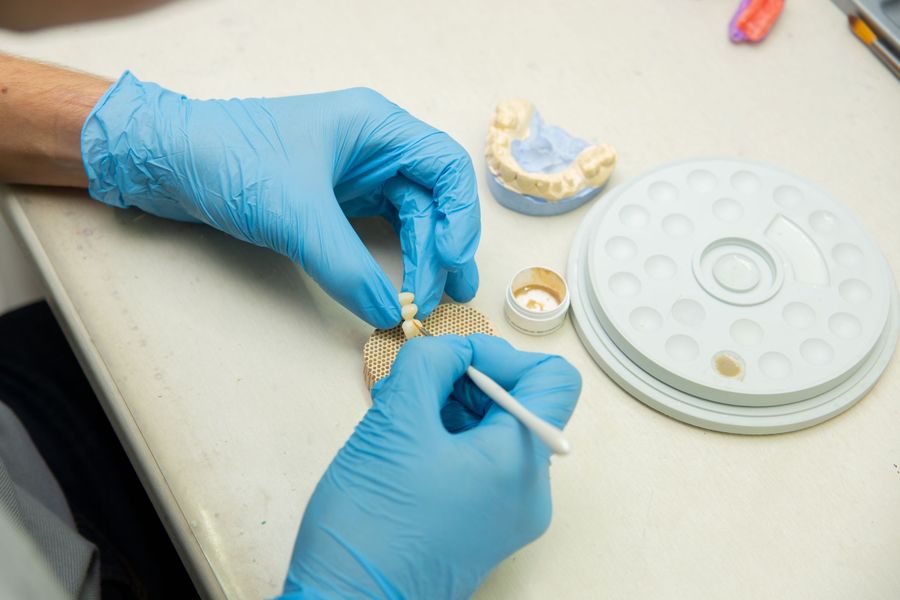
Once decay is through the enamel, the damaged part is taken out and the space is filled. Composite resin and porcelain are both tooth-colored, and each is matched to the shade of the tooth around it. Any filling costs some tooth structure, which is the whole argument for finding decay while the repair is still small.
How It Goes
It is a reading taken tooth by tooth, not a scan of a whole mouth.
A reading is taken on a clean tooth. Plaque or buildup sitting in a groove changes what the light comes back with.
It is calibrated on a sound tooth in the same mouth, so the readings that follow are compared with that person's own enamel rather than an average.
The pit and groove pattern on the chewing surfaces is where a toothbrush is least effective, so that is where the tip goes.
The display gives a reading on a scale, and some units sound a short beep when an area reads as questionable.
A reading is a prompt to look harder, not a verdict. A dentist decides whether an area is treated now or re-checked later, and imaging may still be needed for what light cannot reach.
Before Anything Begins
The consultation comes first, whatever you are here about. It costs nothing and commits you to nothing.
The Money Part
The consultation is free and there is no obligation. You leave with the cost in writing before anything is booked, so the decision is yours to make away from the chair.
If a plan turns out not to be for you, that is a perfectly good outcome of a consultation.
Quick Questions
If yours isn’t here, the consultation is the place for it — or call and ask.
—of 05 open
No. Light cannot travel between two teeth, and the contact points between teeth are one of the places decay starts out of sight. The two methods answer different questions, which is why dentistry still uses both.
Sometimes. Enamel that has weakened but has not broken through can sometimes be handled with a sealant or fluoride instead of a repair. Whether a tooth has passed that point is a judgement a dentist makes after looking at it, and it is not something you can tell from the outside.
It is often used where imaging is difficult, because it is a light reading rather than a picture, and it asks less of a small child than holding still for a film. It does not cover the spaces between teeth, so it does not replace imaging at any age.
It depends on the filling. A filling that has broken down is a different question from one that is simply dark, and tooth-colored material is one of the replacement options. Replacing a filling that is still sound is a cosmetic decision that costs tooth structure, and a dentist assesses which of the two situations a tooth is in.
Decay that is not dealt with tends to get wider and deeper until it reaches the nerve, which is usually when it starts to hurt. At that stage a filling is no longer enough on its own, and the conversation moves to root canal treatment or taking the tooth out.
Also At This Practice
No Cost, No Obligation
About an hour with Dr. Duaa. A scan, straight answers, and a written plan you take home.
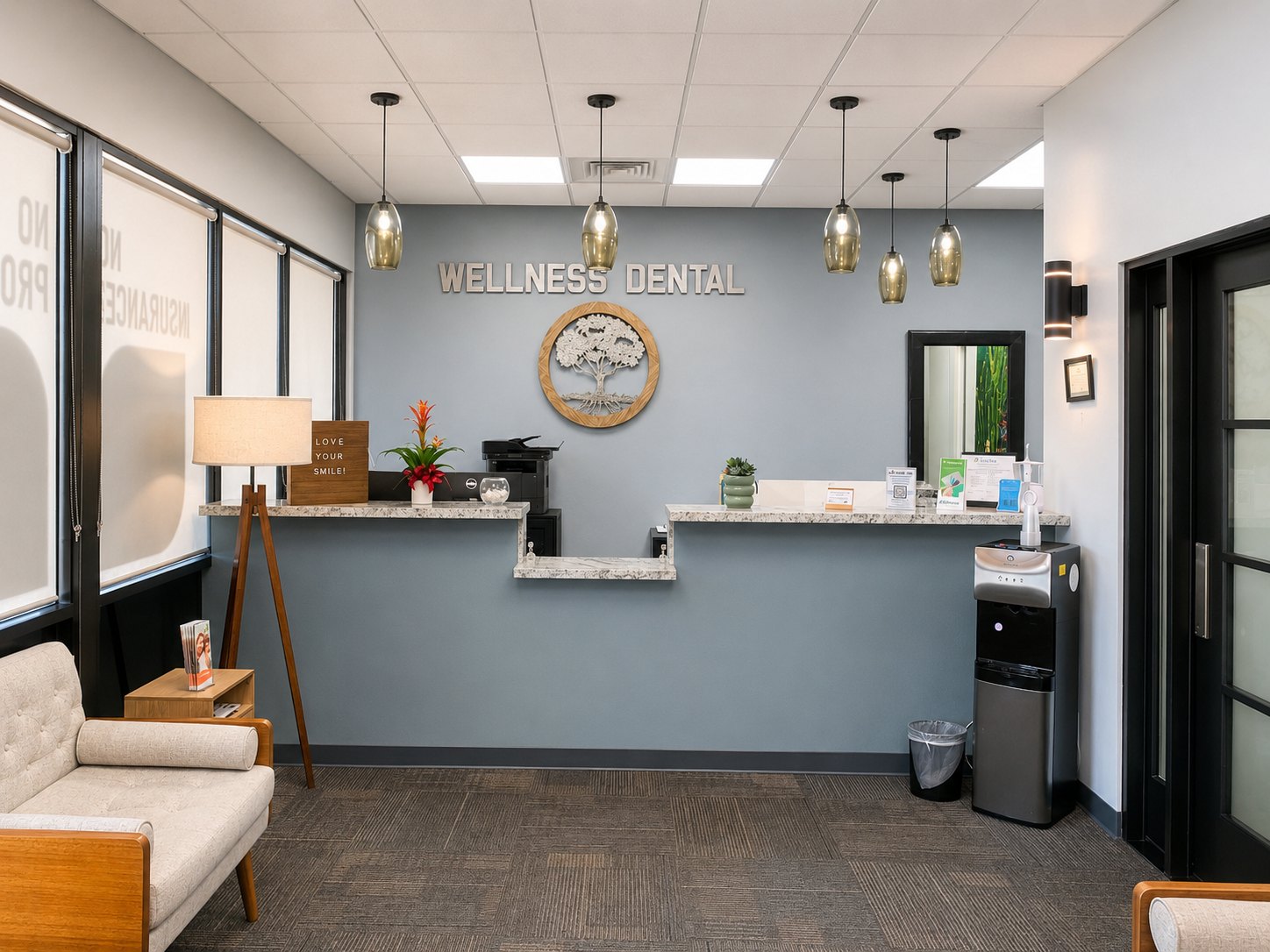
Parking at the door. Nothing is treated on the day, and there is nothing to sign.