01
It started aching on Friday and now I can't sleep.
Pain that wakes you, or that throbs without anything touching the tooth, is the kind a dentist will want to look at rather than wait out.

Thoughtful treatments designed around your goals, comfort, and long-term oral health.
A dental emergency is any problem in your mouth that needs looking at now rather than at the next check-up — pain you can't ignore, a tooth that has broken or come out, swelling that is getting worse. This page explains what those usually mean and what a dentist can do about each one.
Call Now (520) 214-2484
Is This You
Emergency is a broad word. These are the situations behind most of it.
01
Pain that wakes you, or that throbs without anything touching the tooth, is the kind a dentist will want to look at rather than wait out.
02
That pairing points to an abscess — infection at the root of a tooth that has found somewhere to collect — and it is a reason to be seen rather than to wait.
03
A tooth that fractures under ordinary chewing needs examining before anyone decides how to rebuild it — how much sound tooth is left is what determines the options.
04
An adult tooth that has come out of its socket is the one situation here that calls for immediate care — keep the tooth, and get to a dentist as fast as you can.
05
Keep it: a crown that came away cleanly can sometimes be cleaned and re-cemented, though if the tooth underneath has decayed, a new one is usually what's needed.
06
A broken denture counts too — a dentist can look at whether the prosthesis is repairable, including repairing it temporarily while a replacement is made.
The Options
Emergency treatment generally has two aims: settling the pain, and limiting the damage. Which of these applies depends entirely on the tooth.
Local anesthetic, sometimes with a numbing gel on the gum first, blocks the feeling in one small area so the tooth can be examined and worked on. It deals with the pain rather than its cause.
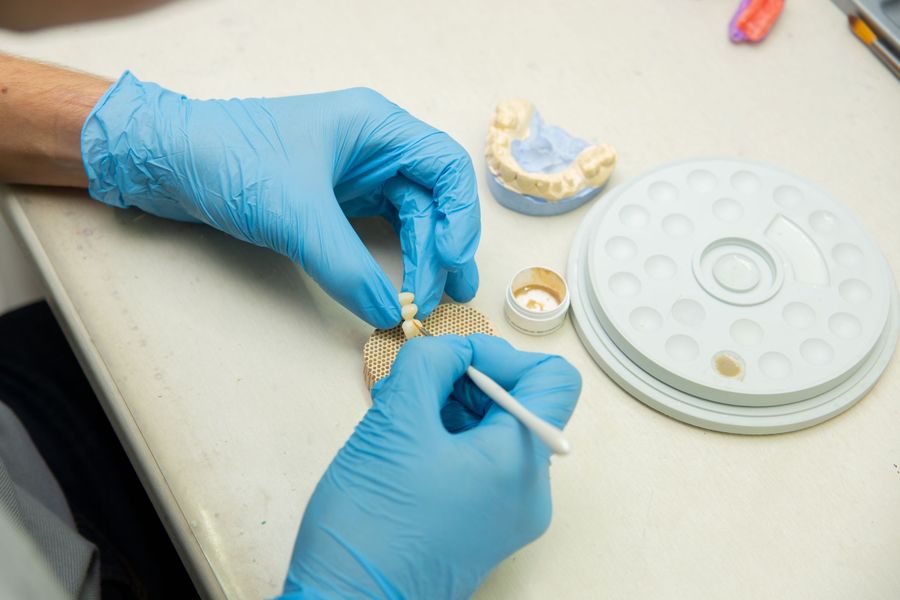
Temporary filling material, or a crown put back with temporary cement, closes an opened-up tooth and makes it usable again. Temporary materials are not built to hold up under normal chewing indefinitely — they buy time until the definitive repair is done.
Tooth-colored composite can be shaped over a chipped edge, and in some cases the broken fragment itself can be bonded back into place. Bonding suits smaller chips; it can stain or chip again, and it is not the answer on a heavily broken tooth.
Where a fracture has taken too much of the tooth for bonding to make sense, a crown covers what remains and holds it together. Fitting one means reducing the outer surface of the tooth first, and that part cannot be undone.
When the nerve inside a tooth is infected or dying, root canal treatment clears out the inside of the tooth and seals it, which is what allows the tooth to be kept. It is a longer appointment than a filling, and a crown is commonly paired with it afterwards.
Some teeth are too broken down or too infected to be worth saving, and an extraction ends the problem outright. It leaves a gap, though, so it is worth asking what replacing that tooth would involve before agreeing to it.
How It Goes
Every case is different and none of this is a promise about your appointment. But emergency dental visits tend to follow the same shape.
Calling ahead is how a dental office finds out what has happened and how long it has been going on before you arrive. Swelling, and a tooth that has come out, are the two details that change how urgent a case is, so say those first.
Where a tooth is painful, settling that generally comes before anything else, most often with a local anesthetic that numbs the one area being worked on.
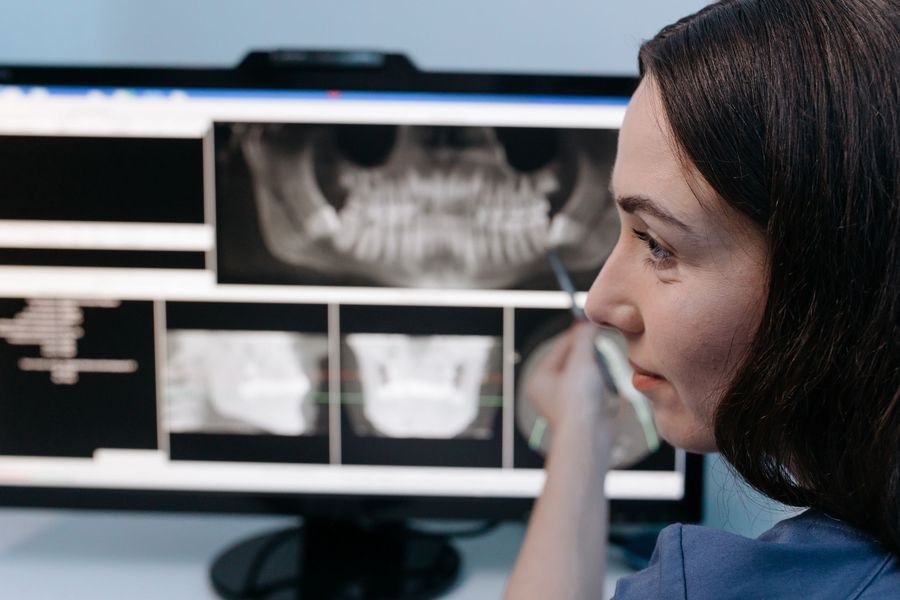
An emergency exam covers what sets the pain off, how long it lasts and how bad it gets, alongside a look at the tooth and the gum around it. Whether an X-ray is needed depends on the case, because the things that matter most — a fracture below the gum line, an abscess at the root — do not show on the surface.
The urgent part and the definitive repair are not always the same appointment. A temporary measure now, with the proper repair arranged for later, is a normal outcome.

Before Anything Begins
For planned treatment, the consultation comes first. It costs nothing and commits you to nothing.
The Money Part
The consultation is free and there is no obligation. You leave with the cost in writing before anything is booked, so the decision is yours to make away from the chair.
If a plan turns out not to be for you, that is a perfectly good outcome of a consultation.
Quick Questions
If yours isn’t here, the consultation is the place for it — or call and ask.
—of 04 open
Some things belong in a hospital rather than a dental chair. Swelling that is spreading across your face, or bleeding that will not stop under firm pressure, needs urgent medical care — go to the nearest emergency room. The tooth itself can be dealt with afterwards.
They can take the edge off for a while, because they act on the infection that has spread out from the tooth. What they do not do is treat the inside of the tooth the infection is coming from, so it tends to return once the course finishes. Treating the source means either root canal treatment or removing the tooth.
As soon as possible — an adult tooth out of its socket is treated as needing immediate care. Keep the tooth and take it with you. Whether the tooth can be held in position with a splint while the socket heals depends on the tooth itself and on how long it spent out of the mouth. Where that is not possible, root canal treatment or removal are the usual routes.
Not usually. Urgency, rather than whether someone is already on the books, is what generally decides who gets seen first. Calling is how to find out: say what has happened and when it started, because that is what a dental office needs in order to judge how soon someone should be looked at.
Also At This Practice
No Cost, No Obligation
About an hour with Dr. Duaa. A scan, straight answers, and a written plan you take home.

Parking at the door, and there is nothing to sign.