In-chair whitening
A professional-strength gel goes onto the teeth in the chair, and a light is then used to set it working, so the whole application happens there rather than being spread out at home. Gel at that concentration is handled in a dental setting rather than sold off a shelf. It acts on natural enamel: crowns, veneers and white fillings keep whatever shade they were made in.
Take-home whitening trays
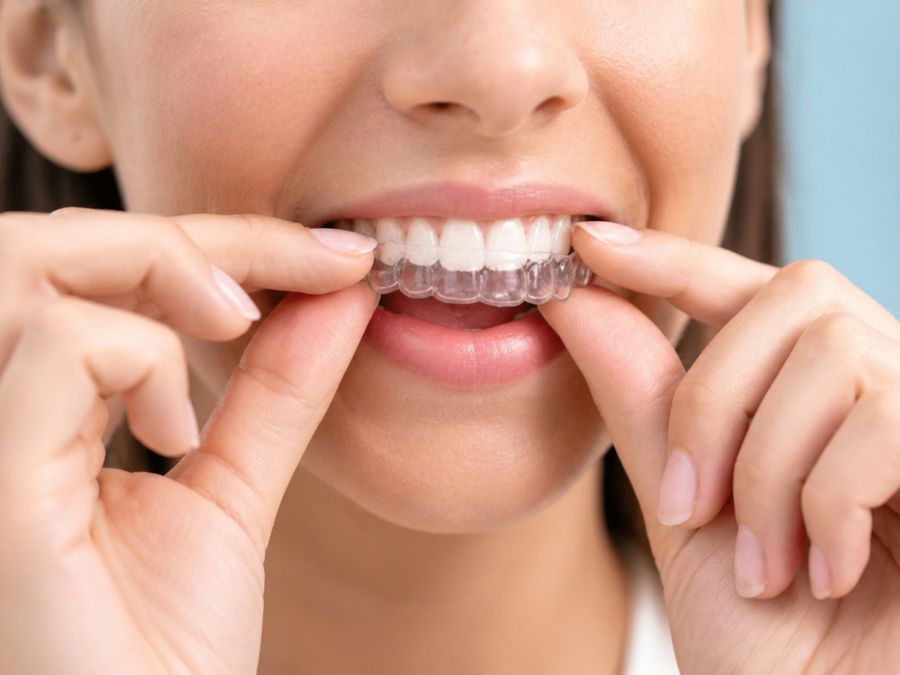
Custom-fitted trays hold a professional gel against the enamel, worn for a period each day as directed. The change builds gradually rather than arriving in one go, which suits people who would rather spread it out or top up later. It also depends entirely on the trays actually being worn.
Porcelain veneers
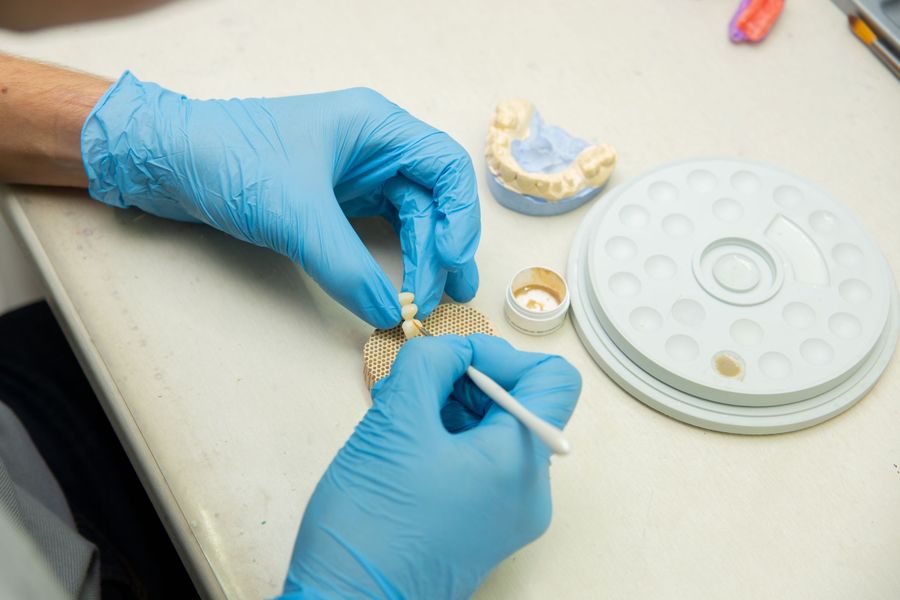
Thin shells made in a laboratory and bonded across the visible front of a tooth. Only that outer face is covered: the inside is left alone and nothing reaches the back surface, which is what separates a veneer from a crown. To stop them sitting proud, a little of the enamel on that front face is normally buffed away first. Enamel does not grow back, so that is a decision made once.
No-prep veneers
Veneers bonded straight onto the existing tooth with nothing removed, which means they can be taken off again later. Because nothing is removed, they add thickness to the front of the tooth, so the existing shape and position of the teeth decide whether the result will look right. Not every tooth is a candidate.
Composite bonding
Tooth-colored resin shaped directly onto the tooth and hardened with a light, usually to close a small gap or rebuild a chipped edge. Because it is worked on the tooth, there is no laboratory stage. The trade-off is the material: composite is more opaque than porcelain, so it looks less natural spread over a whole tooth, and it is more brittle, chipping, wearing and picking up stain sooner.
Clip-on or snap-on veneers
Removable shells sold to slip over the natural teeth and hide surface flaws. Worth knowing about mainly for what they do not do: sitting over the teeth and gum line, they trap bacteria underneath, and they conceal decay and gum disease rather than treating either. They cover a problem instead of fixing it, and they do not suit everyone.