
Wellness Dental · East Tucson

Dentures in East Tucson

A denture replaces missing teeth with a piece that comes out again — a few teeth, or every tooth in one jaw. Which kind fits a mouth depends on how many natural teeth are left, and on several other things a dentist has to weigh up.

Call Now (520) 214-2484
Older woman smiling comfortably in warm daylight

Is This You

When dentures come up.

A denture is not the first answer to every gap. These are the situations it is usually raised in.

01

I've lost a couple of teeth on one side, so I chew on the other.

Gaps with sound teeth still standing either side are what partial dentures are made for. The clasps grip those teeth, which is also why a partial only works while there are teeth left to grip.

02

A dentist has told me some of my teeth can't be saved.

Teeth too broken down or too loose to restore are sometimes removed for the sake of the rest of the mouth. Where several go together, a denture is one way of replacing them in one piece rather than one at a time.

03

There's nothing left in my upper jaw.

A full denture replaces a whole arch as a single piece. An upper is held against the palate by suction rather than attached to anything, and it takes getting used to.

04

I need teeth out, but I can't go around with none.

An immediate denture is made before the extractions and worn straight afterwards, so there is no stretch without teeth. The trade-off is that it is built to a mouth that has not healed yet, so it needs adjusting once healing is done.

05

My lower denture lifts when I eat, and I'm using more paste than I used to.

A denture that will not sit still is a fit problem. Implants set beneath a denture to hold it are one option where fit is the difficulty; reassessing the fit of the denture itself is another. A dentist works out which applies.

The Options

The types, and their trade-offs.

Dentures are not one thing. Which type suits a mouth depends on what is still in it — so here is what each one is, and what each one asks of you.

Partial dentures

A partial replaces a small number of missing teeth and leaves the rest alone. It carries one or more false teeth on an acrylic base, with clasps — metal or flexible — hooking around the natural teeth either side to hold it in place. It comes out at night and for cleaning. A partial leans on the teeth that are left, so it is only an option while there are healthy ones there to hold it.

How It Goes

The shape of denture treatment.

This is the general order things happen in, not a timetable. How much of it applies depends on what is still in the mouth.

01

Working out whether a denture is the answer

How many natural teeth remain, and whether they can be kept, drives everything else. Bridges and implants replace missing teeth in other ways, so a denture is weighed against those rather than assumed. A dentist assesses which options the mouth can support before any of them is planned.

02

Removing only what cannot be kept

Natural teeth are worth keeping wherever they can be kept. Removal comes into it only where a tooth is beyond restoring, and it is a judgment made tooth by tooth rather than all at once.

03

Letting the mouth settle

Gum and jaw change shape after extractions. Healing takes time and how long it takes varies from person to person, which is why a conventional denture is made after that settling rather than before it. An immediate denture covers the stretch in between, in exchange for needing adjustment once the mouth has finished changing.

04

Cleaning it, and keeping an eye on the fit

A denture comes out daily to be cleaned, and comes out overnight. Fit is worth having looked at rather than left alone: a denture that has stopped sitting well is a question for a dentist rather than something to work around.

The waiting area at the E Grant Rd practice

Before Anything Begins

Nothing is decided before it is seen.

The consultation comes first, whatever you are here about. It costs nothing and commits you to nothing.

A 3D scan The consultation includes a scan, so a plan is drawn from what is actually there rather than from a guess.
A written plan You leave with it on paper, including the cost, and decide in your own time. Nothing is treated on the day.
One dentist Dr. Duaa Hamoud, DMD sees you herself — the same person at the consultation and at the treatment.

The Money Part

Know the number before you decide.

The consultation is free and there is no obligation. You leave with the cost in writing before anything is booked, so the decision is yours to make away from the chair.

If a plan turns out not to be for you, that is a perfectly good outcome of a consultation.

Delta Dental, United Concordia & TRICARE Accepted at the practice today.
Not one of those? Call (520) 214-2484 and we’ll tell you where things stand.

Quick Questions

The things people ask first.

If yours isn’t here, the consultation is the place for it — or call and ask.

of 05 open

A denture that fits well needs little or none. An upper is held by suction, so it can usually sit against the gum unaided. A lower rests on a narrower ridge, and that is where denture paste tends to get used. Where a lot of it is needed, the fit is the thing worth looking at rather than the paste.

Out of the mouth, every day. A soft-bristled brush, mild soap or a cleaner sold for the purpose, then a proper rinse so nothing is left on them. Warm water only — heat can warp the material. They soak overnight, since they are not worn during sleep anyway.

Different at first, and it takes practice. Soft, easy foods are the sensible starting point, widening out from there. Food cut small is easier to manage than a full mouthful, and chewing on both sides at once spreads the load so the denture is less likely to tip. Sticky and hard foods are the difficult ones, and bones and fruit pits deserve care — they can damage a denture.

No. Partial dentures exist precisely because some teeth are still worth keeping. Natural teeth are preserved wherever they can be, and removal is considered only where a tooth cannot be restored.

A bridge is fixed: it cements to a sound tooth either side of the gap and stays in the mouth. An implant replaces a tooth from the root up, set into the jaw. Both do a related job in a different way, and neither suits every mouth. A dentist assesses which of the three a case can actually support.

Also At This Practice

On the wrong page? Try one of these.

No Cost, No Obligation

Start with a conversation.

About an hour with Dr. Duaa. A scan, straight answers, and a written plan you take home.

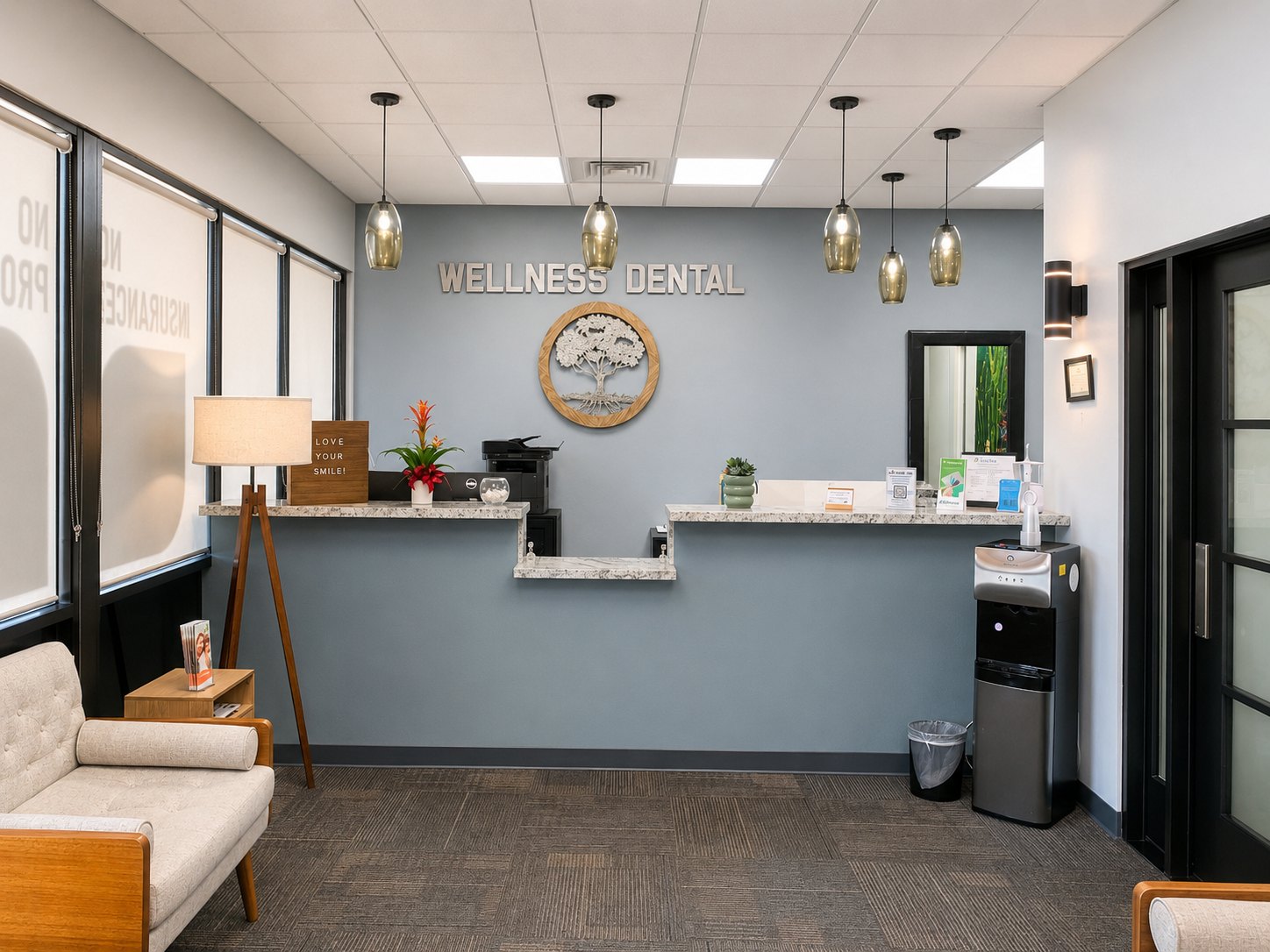
The reception desk at the E Grant Rd practice
$0a $500 consultation
  • A 3D scanA full digital scan of your teeth and bite, with no impression putty.
  • Straight answersWhat is actually going on, what the options are, and what each one involves.
  • A written planCosts included, on paper, yours to take away and think about.
  • No pressureBook when you are ready, or don’t.

Parking at the door. Nothing is treated on the day, and there is nothing to sign.